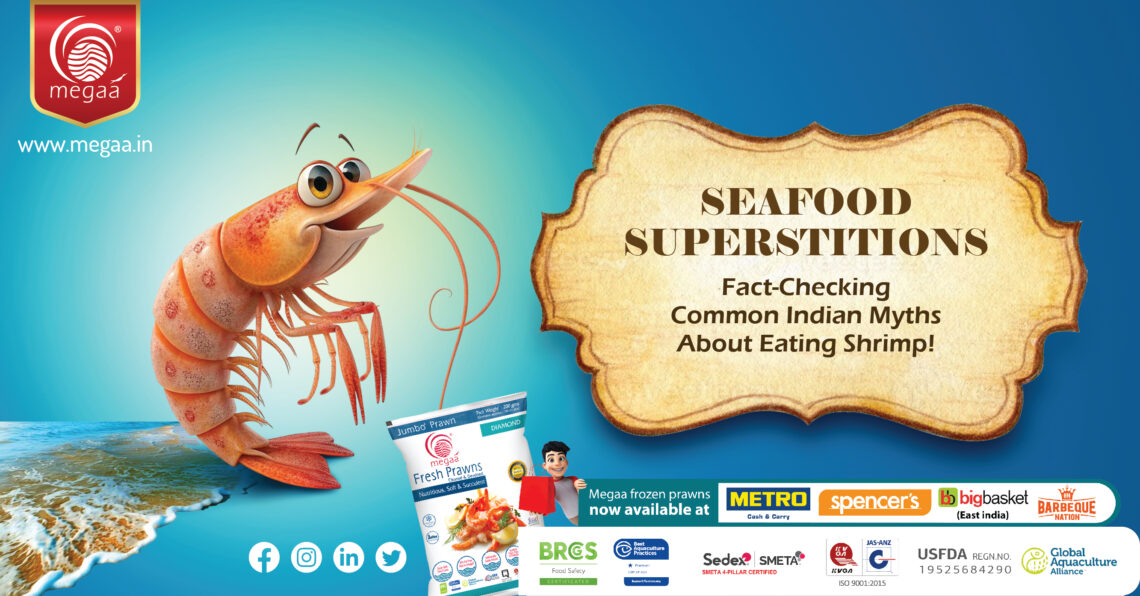
SEAFOOD SUPERSTITIONS
Fact-Checking Common Indian Myths About Eating Shrimp
India’s rich food culture is filled with traditions, family wisdom, and age-old beliefs. While many of these ideas have cultural significance, some food myths have persisted for generations without scientific backing. Shrimp, often called prawns in Indian kitchens, is one such ingredient surrounded by misconceptions. From warnings about cholesterol to strange food combinations, several myths continue to influence how people consume seafood.
Let’s separate fact from fiction and understand what science really says about eating shrimp.
Myth 1: Shrimp Is Unhealthy Because It Contains Too Much Cholesterol
This is one of the most common concerns people have about shrimp. Yes, shrimp does contain dietary cholesterol, but that doesn’t automatically make it harmful.
Nutrition research now shows that dietary cholesterol does not impact blood cholesterol levels as significantly as once believed. Shrimp is actually low in saturated fat—the type of fat that raises harmful cholesterol levels—and it also contains small amounts of heart-friendly omega-3 fatty acids. In moderation, shrimp can be part of a balanced and healthy diet.
In addition, shrimp is rich in protein, vitamin B12, iodine, and selenium, all of which support metabolism, nerve function, and overall health.
Myth 2: You Should Avoid Seafood During the Monsoon
In many Indian households, people are told not to eat fish or shrimp during the monsoon season. While this belief has some practical roots, it’s often misunderstood.
The original reason behind this caution was related to fishing conditions. During monsoon months, rough seas make fishing difficult, and many species are in their breeding season. As a result, fresh seafood may be less available, and improperly stored seafood could increase the risk of stomach infections. However, if seafood is fresh and hygienically handled, it is perfectly safe to consume during the rainy season.
Myth 3: Shrimp Is Low in Nutrition
Another misconception is that shrimp is tasty but not particularly nutritious. In reality, shrimp is a nutrient-dense food. It is a high-quality source of lean protein while being relatively low in calories. It also contains antioxidants such as astaxanthin that help reduce cellular damage in the body.
This makes shrimp a good option for people who want flavorful meals without heavy fats or excess calories.
Myth 4: Frozen Shrimp Is Inferior to Fresh Shrimp
Many people assume frozen shrimp is less nutritious than fresh seafood. In fact, shrimp is often frozen immediately after being caught to preserve its freshness and nutritional value. Proper freezing helps maintain quality, especially in areas far from coastal markets.
For many households, frozen shrimp is simply a convenient way to enjoy seafood without compromising taste or nutrition.
The Bottom Line
Food traditions are an important part of Indian culture, but it’s equally important to look at modern nutritional knowledge. When sourced properly and cooked well, shrimp is a healthy, protein-rich seafood that fits comfortably into a balanced diet.
The next time you hear a warning about eating shrimp, remember that not every kitchen myth is grounded in science. Sometimes, the best approach is simple: choose fresh, responsibly sourced seafood, cook it well, and enjoy it without unnecessary worries.