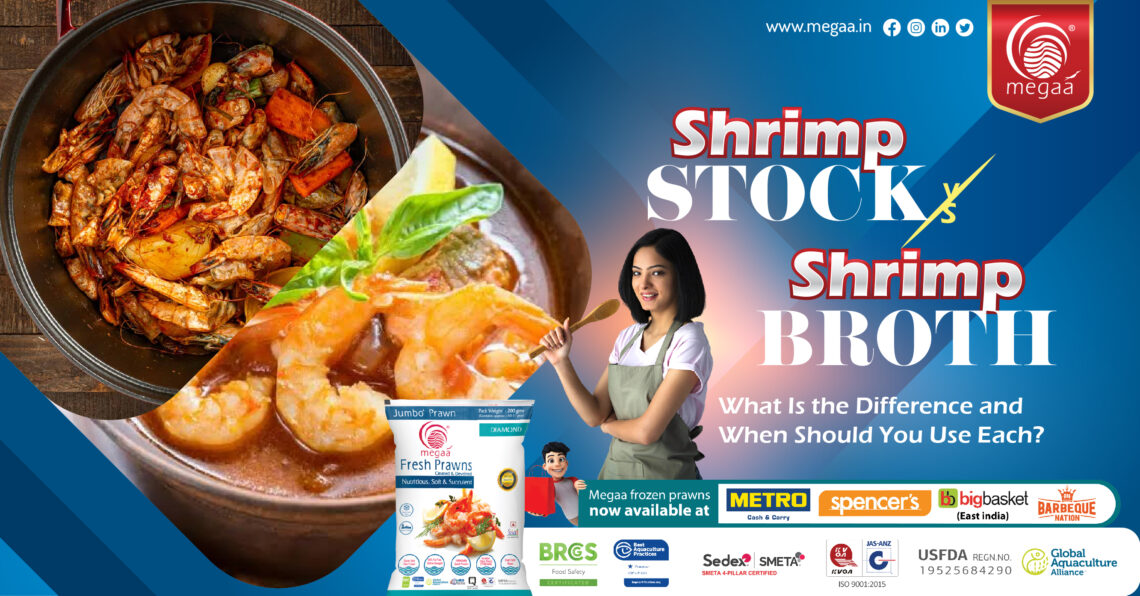
SHRIMP STOCK VS SHRIMP BROTH
What Is the Difference and When Should You Use Each?
Shrimp is loved for its delicate flavour, but there is another part of shrimp that can add incredible depth to a dish: the shells and trimmings. They can be used to make both shrimp stock and shrimp broth. While these two terms are often used interchangeably, they are not exactly the same.
Understanding the difference can help you choose the right one for soups, sauces, rice dishes and seafood preparations.
What Is Shrimp Stock?
Shrimp stock is primarily made by simmering shrimp shells and heads with vegetables, herbs and aromatics in water. The shells contain natural flavours that are released slowly during cooking, creating a rich and concentrated seafood base.
Stock is generally made to become an ingredient in another dish rather than being served on its own. Its flavour is often stronger and more concentrated, making it useful when you want to build depth without adding large amounts of liquid.
Shrimp stock works particularly well in dishes such as seafood risotto, paella, seafood pasta sauces, shrimp fried rice and seafood stews. It can also be reduced further to create a concentrated base for sauces and gravies.
What Is Shrimp Broth?
Shrimp broth is usually lighter and more suitable for drinking or serving as part of a finished dish. It can be made using shrimp meat, shells or both, along with vegetables, herbs and seasonings.
Because broth is often seasoned during preparation, it can have a more complete flavour on its own. This makes it a good choice for soups, noodles and lighter seafood dishes where the liquid itself is an important part of the meal.
For example, a warm shrimp broth can form the base of a seafood soup, noodle bowl or simple rice dish.
The Key Difference
The easiest way to remember the difference is to think about purpose and intensity.
Shrimp stock is usually more concentrated and is mainly used as a cooking base. Shrimp broth is generally lighter, seasoned and can be enjoyed as part of the finished dish.
However, there is no universal rule separating the two. Recipes and culinary traditions may use the terms differently. What matters most is the flavour, concentration and ingredients used.
When Should You Use Shrimp Stock?
Choose shrimp stock when you want to add a strong seafood flavour without making the dish too watery.
It is especially useful for:
- Seafood risotto and rice dishes
- Pasta sauces
- Paella and other seafood rice preparations
- Seafood stews
- Gravies and reductions
- Bisques and creamy seafood soups
A well made stock can bring out the natural sweetness and savoury character of shrimp while supporting the other ingredients.
When Should You Use Shrimp Broth?
Shrimp broth is a better choice when you want the liquid to be enjoyed as part of the dish.
Use it for:
- Seafood soups
- Noodle soups
- Light rice preparations
- Asian inspired seafood dishes
- Simple shrimp based sauces
- Dishes where a lighter seafood flavour is preferred
Making the Most of Shrimp
Whether you choose stock or broth, using shrimp shells and heads can be a great way to extract more flavour and reduce food waste. The shells contain natural compounds that can add a deep seafood character to the cooking liquid.
For home cooks and seafood lovers, knowing when to use stock and when to use broth can make a noticeable difference. Stock is ideal when you want a concentrated foundation, while broth works well when you want a lighter, seasoned liquid that can stand on its own.
The next time you prepare shrimp, do not overlook the shells. They can be the beginning of a flavourful base that takes your seafood dishes to the next level.