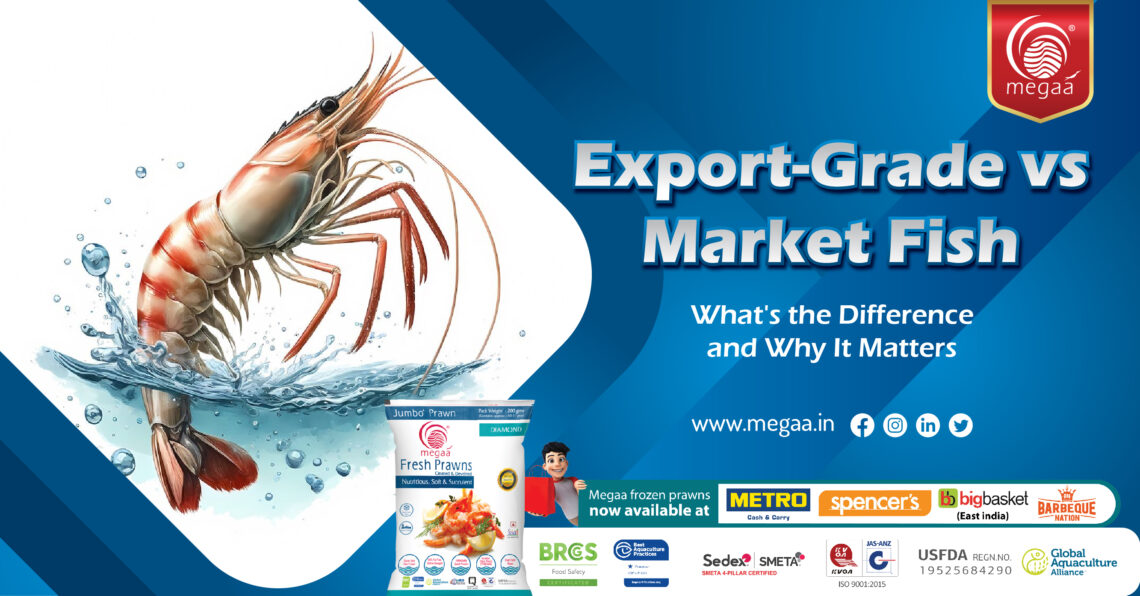
Export-Grade vs Market Fish: What’s the Difference and Why It Matters
When buying seafood, many people assume that all fish and shrimp are essentially the same. However, in the global seafood industry, there is a significant distinction between export-grade and market-grade products. From harvesting and handling to processing and packaging, every step determines the final quality that reaches the consumer.
For seafood importers, retailers, restaurants, and even health-conscious families, understanding this difference can make a big impact on taste, freshness, food safety, and overall value.
What Is Export-Grade Seafood?
Export-grade seafood refers to fish, shrimp, and other marine products that meet strict international quality standards. These products are carefully selected, processed under hygienic conditions, and subjected to multiple quality checks before being shipped to global markets.
Export-grade seafood is typically characterized by:
- Uniform size and appearance
- Superior freshness
- Strict hygiene and sanitation practices
- Traceable sourcing
- Advanced freezing and cold-chain management
- Compliance with international food safety regulations
For leading exporters like Megaa Moda Pvt. Ltd., maintaining these standards is essential to delivering premium seafood that meets the expectations of buyers across the world.
What Is Market-Grade Seafood?
Market-grade seafood is generally intended for local or regional consumption. While it can still be fresh and safe, it may not always undergo the same rigorous sorting, grading, and quality assurance processes required for international trade.
Variations in size, handling methods, storage conditions, and transportation can affect the final product. Depending on the supply chain, the seafood may experience longer exposure to fluctuating temperatures, which can influence texture and shelf life.
This doesn’t necessarily mean market-grade fish is inferior—it simply serves a different market with different quality requirements.
Why the Difference Matters
1. Better Freshness Preservation
One of the biggest advantages of export-grade seafood is the speed and precision of processing. Premium shrimp and fish are often cleaned, graded, and frozen soon after harvest, helping preserve their natural flavor and texture.
A well-maintained cold chain minimizes quality loss and ensures that the product reaches international markets in excellent condition.
2. Higher Food Safety Standards
Global seafood buyers expect strict compliance with food safety regulations. Export-grade facilities follow detailed quality control systems, including regular inspections, laboratory testing, and hygienic processing environments.
These measures help reduce contamination risks and provide greater confidence for distributors and consumers alike.
3. Consistent Quality
Whether it’s a five-star restaurant or a retail supermarket, consistency matters. Export-grade seafood is sorted according to size, weight, and quality specifications, making it easier for chefs and food businesses to maintain uniform presentation and portion control.
This is especially important for premium shrimp products, where consistency directly influences customer satisfaction.
4. Improved Shelf Life
Careful handling and advanced freezing technologies help maintain the freshness of export-grade seafood for longer periods. Proper packaging protects the product during international transportation while preserving taste and nutritional value.
Why Shrimp Requires Special Attention
Shrimp is one of the most widely traded seafood products in the world, but it is also highly sensitive to handling practices. Delays in processing or breaks in the cold chain can quickly affect quality.
Export-grade shrimp is carefully monitored from harvest to shipment. Factors such as water quality, harvesting methods, processing hygiene, grading, and packaging all contribute to delivering a premium product that meets global expectations.
For international buyers, these quality controls are not just an advantage—they are a necessity.
Choosing Seafood You Can Trust
In today’s global market, consumers are paying closer attention to where their food comes from and how it is processed. Businesses that prioritize quality assurance, traceability, and responsible seafood handling stand out as trusted suppliers.
At Megaa Moda Pvt. Ltd., every stage of the seafood journey is guided by a commitment to excellence. By adhering to stringent export standards and modern processing practices, we deliver shrimp and seafood products that combine freshness, consistency, and reliability.
The Bottom Line
The difference between export-grade and market-grade seafood goes far beyond appearance. It reflects the care taken during harvesting, processing, storage, and transportation.
Choosing export-grade fish and shrimp means choosing products that have been held to some of the highest standards in the seafood industry. For importers, retailers, food service businesses, and consumers, that translates into better quality, greater food safety, and a superior dining experience.
Because when it comes to seafood, the journey from the ocean to the table matters just as much as the catch itself.