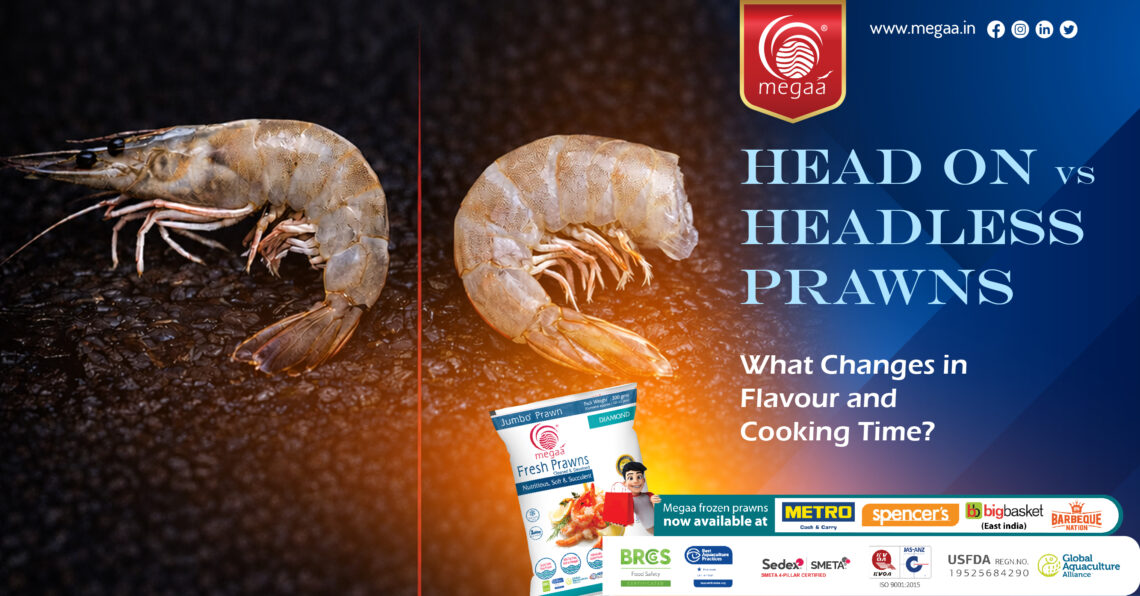
HEAD ON VS HEADLESS PRAWNS
What Changes in Flavour and Cooking Time?
When buying prawns, one of the first choices you may come across is whether to choose them head on or headless. While both options can be excellent for different dishes, the choice can affect flavour, cooking time, preparation and even how you experience the prawns on your plate.
Understanding the difference can help you choose the right format for your recipe and get the best out of every prawn.
What Does Head On and Headless Mean?
Head-on prawns are sold with the head and shell still attached, while headless prawns have the head removed. Depending on the product, the shell and tail may still be present.
The head contains natural fats, juices and flavour compounds that contribute to the overall taste of the prawn. This is why head on prawns are often preferred when the goal is to create a rich and deeply flavoured dish.
Headless prawns, on the other hand, are easier to clean, prepare and eat. They are especially convenient for recipes where the prawns are being peeled, marinated or cooked as part of a larger dish.
How Does the Choice Affect Flavour?
The biggest difference is often noticed in the flavour of the finished dish.
When cooked with the head on, prawns can release their natural juices and fats into the cooking liquid. This can give curries, gravies, soups and broths a fuller seafood flavour. The head can also add richness when prawns are grilled or cooked with spices.
Headless prawns have a cleaner and milder flavour. Since the head is removed, there is less natural prawn flavour released during cooking. This makes them a good choice for preparations where you want the seasoning, sauce or marinade to be the main flavour.
Neither option is necessarily better. It simply depends on the kind of dish you are preparing and the flavour you want to achieve.
Does Cooking Time Change?
Yes, but the difference is usually not dramatic.
Head on prawns may take slightly longer to cook because there is more of the prawn to heat through. Their shell and head also provide some protection from direct heat.
Headless prawns generally cook a little faster because the head has already been removed. This makes them convenient for quick preparations such as stir fries, pasta, fried prawns and other dishes where cooking time needs to be controlled carefully.
Regardless of the format, prawns should be cooked just until they turn opaque and firm. Overcooking can make them dry and rubbery.
Which One Should You Choose?
Choose head on prawns when you want:
• A richer seafood flavour
• More depth in curries, soups and gravies
• A traditional presentation
• Extra flavour from the natural juices
Choose headless prawns when you want:
• Easier preparation
• Faster cooking
• Convenient eating
• A cleaner, milder prawn flavour
The Right Choice Depends on the Dish
The head on versus headless choice is ultimately about convenience, flavour and the kind of cooking you have in mind. Head on prawns can bring extra richness and depth to a dish, while headless prawns offer simplicity and ease without compromising the natural taste of quality seafood.
Whether you are preparing a traditional prawn curry, grilling prawns for a family meal or making a quick weekday recipe, choosing the right format can make the cooking experience easier and the final dish more enjoyable.