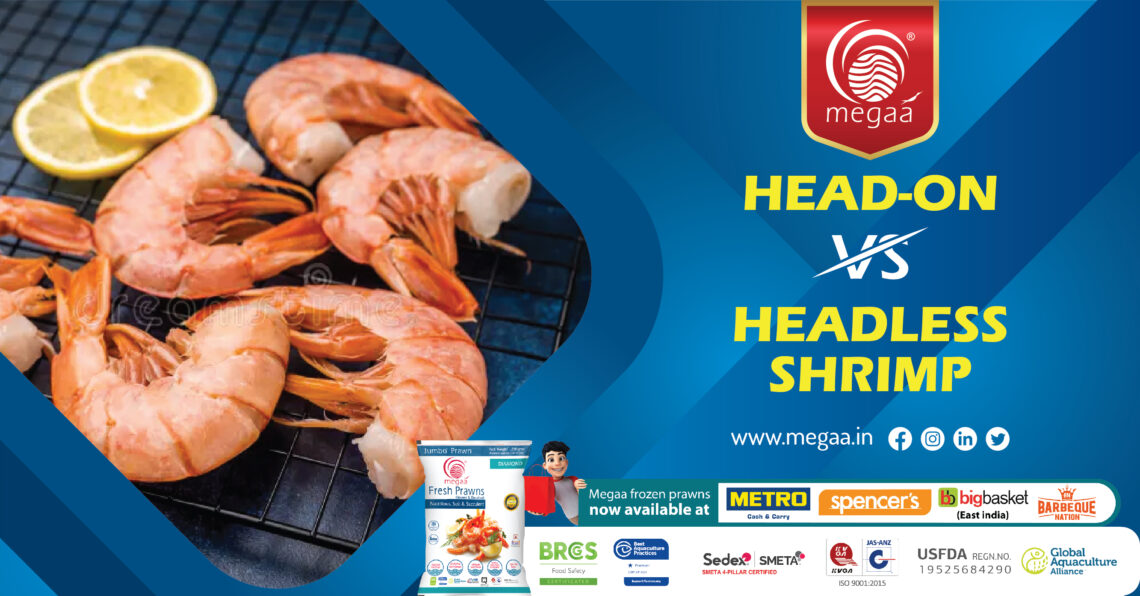
HEAD-ON VS HEADLESS SHRIMP
What Buyers Prefer and Why
When it comes to choosing shrimp for export, foodservice, or retail, one common question always comes up: head-on or headless shrimp? While both formats come from the same high-quality catch, buyer preference depends on usage, market demand, presentation, and practicality. Understanding these differences helps buyers make informed decisions and ensures they get the best value for their needs.
At Megaa Moda, we process shrimp to meet diverse global requirements, offering both head-on and headless options with consistent quality and freshness.
What Are Head-On Shrimp?
Head-on shrimp are processed with the head intact, while the body is cleaned and frozen. This format is especially popular in traditional cuisines and premium seafood markets.
Why buyers choose head-on shrimp:
- Enhanced flavour: The head contains natural juices that intensify taste during cooking, making it ideal for broths, curries, and grilled preparations.
- Visual appeal: Head-on shrimp look larger and more impressive on the plate, often preferred for fine dining and festive dishes.
- Cultural preference: Many Asian, Middle Eastern, and European markets value whole shrimp for authenticity and freshness perception.
- Perceived freshness: For some buyers, the presence of the head signals minimal processing and a more “natural” product.
However, head-on shrimp require more careful handling. They are more sensitive to temperature changes and need precise freezing to maintain colour, texture, and freshness.
What Are Headless Shrimp?
Headless shrimp are processed by removing the head soon after harvest, followed by cleaning, grading, and freezing. This is the most commonly traded format globally.
Why buyers prefer headless shrimp:
- Convenience: Headless shrimp are easier to store, cook, and portion, saving preparation time in commercial kitchens.
- Better yield consistency: Buyers know exactly how much edible meat they are getting, which is crucial for cost control.
- Longer shelf stability: Removing the head reduces enzymatic activity, helping maintain texture and quality during frozen storage.
- Wider market acceptance: Retail chains, restaurants, and institutional buyers often prefer headless shrimp for uniformity.
Headless shrimp are ideal for value-driven buyers who prioritise efficiency without compromising on taste or quality.
How Buyers Decide: Key Factors
The choice between head-on and headless shrimp usually depends on these factors:
- End use: Restaurants focusing on presentation may prefer head-on shrimp, while bulk kitchens opt for headless.
- Target market: Regional culinary traditions strongly influence preference.
- Handling and logistics: Headless shrimp are easier to transport and store in large volumes.
- Cost considerations: Headless shrimp offer predictable yields, while head-on shrimp can command premium pricing.
Megaa Moda’s Approach to Both Formats
At Megaa Moda, we understand that one format does not fit all. Our shrimp are processed under strict quality controls to ensure both head-on and headless products meet international standards. Rapid freezing techniques help preserve natural colour, firmness, and flavour, regardless of the format.
Each batch is graded for consistency, ensuring buyers receive shrimp that perform reliably in their kitchens and supply chains. Whether the requirement is premium presentation or operational efficiency, our shrimp are tailored to match buyer expectations.
Final Thoughts
There is no absolute winner in the head-on vs headless debate. Buyer preference depends on usage, market demand, and logistical needs. Head-on shrimp offer visual appeal and richer flavour, while headless shrimp deliver convenience and consistency.
With Megaa Moda, buyers don’t have to compromise. We deliver export-grade shrimp in both formats—processed with care, frozen at peak freshness, and trusted by global buyers who value quality above all.