PEELED VS SHELL-ON SHRIMP
Use Cases Explained
Shrimp is one of the most versatile seafood choices in kitchens across the world. From quick home-style meals to elaborate restaurant dishes, the way shrimp is prepared before cooking plays a major role in flavour, texture, and overall experience. Two of the most commonly used types are peeled shrimp and shell-on shrimp. While both come from the same high-quality harvest, their use cases are quite different. Understanding when to choose each can help you get the best results on the plate.
At Megaa Moda, shrimp is processed and frozen with precision so that every type retains its natural quality. Here’s a clear breakdown of peeled versus shell-on shrimp, and where each works best.
What Is Peeled Shrimp?
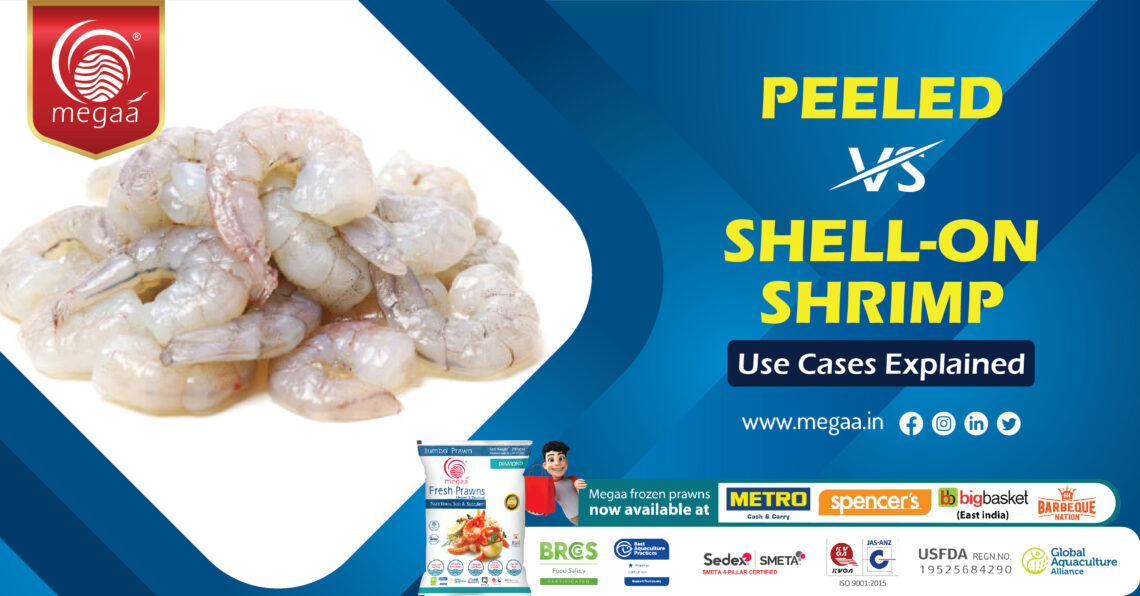
Peeled shrimp has had its outer shell removed, and depending on the requirement, may also be deveined. This type is designed for convenience and speed, making it extremely popular in both domestic and commercial kitchens.
Best Use Cases for Peeled Shrimp
Peeled shrimp is ideal for dishes where quick preparation is essential. Since the shell is already removed, it saves valuable time during cooking and allows the shrimp to absorb marinades and seasonings more effectively.
This type works especially well for:
- Stir-fries and sautés where shrimp needs to cook evenly in a short time
- Curries, gravies, and masalas where flavours must penetrate the flesh
- Pastas, fried rice, and noodles where ease of eating is important
- Breaded or battered shrimp preparations like tempura and cutlets
Because peeled shrimp is ready to cook, it is widely preferred by cloud kitchens, caterers, and home cooks who want consistency without additional prep work.
What Is Shell-On Shrimp?
Shell-on shrimp retains its natural outer shell during processing. This traditional type is valued for its ability to protect the shrimp’s moisture and enhance flavour during cooking.
Best Use Cases for Shell-On Shrimp
Shell-on shrimp is best suited for dishes where depth of flavour and presentation matter. The shell acts as a natural barrier, helping the shrimp stay juicy and develop a richer taste when exposed to heat.
This type is commonly used for:
- Grilled or barbecued shrimp where direct heat intensifies flavour
- Boiled or steamed preparations such as seafood platters
- Traditional coastal recipes where shells add character and aroma
- Restaurant-style dishes where visual appeal is important
Many chefs prefer shell-on shrimp for premium preparations because the shell contributes to a fuller seafood taste and helps maintain firmness.
Flavour, Texture, and Cooking Control
One of the biggest differences between peeled and shell-on shrimp lies in flavour retention. Shell-on shrimp tends to have a slightly sweeter, more pronounced shrimp taste due to the shell locking in natural juices. Peeled shrimp, on the other hand, excels at soaking up marinades and spices, making it perfect for flavour-forward dishes.
Texture also varies slightly. Shell-on shrimp generally stays firmer during cooking, while peeled shrimp offers uniform texture and faster heat absorption.
Choosing the Right Type
There is no “better” option between peeled and shell-on shrimp—only the right choice for the right dish. If convenience, speed, and clean presentation are your priorities, peeled shrimp is the clear winner. If flavour depth, juiciness, and traditional cooking styles matter more, shell-on shrimp delivers superior results.
At Megaa Moda, both types are processed under strict quality standards, ensuring natural colour, firm texture, and consistent size. Whether peeled or shell-on, the focus remains the same—shrimp that performs reliably in every kitchen.
Understanding these differences helps chefs, businesses, and home cooks make smarter choices and get the most out of every shrimp dish.