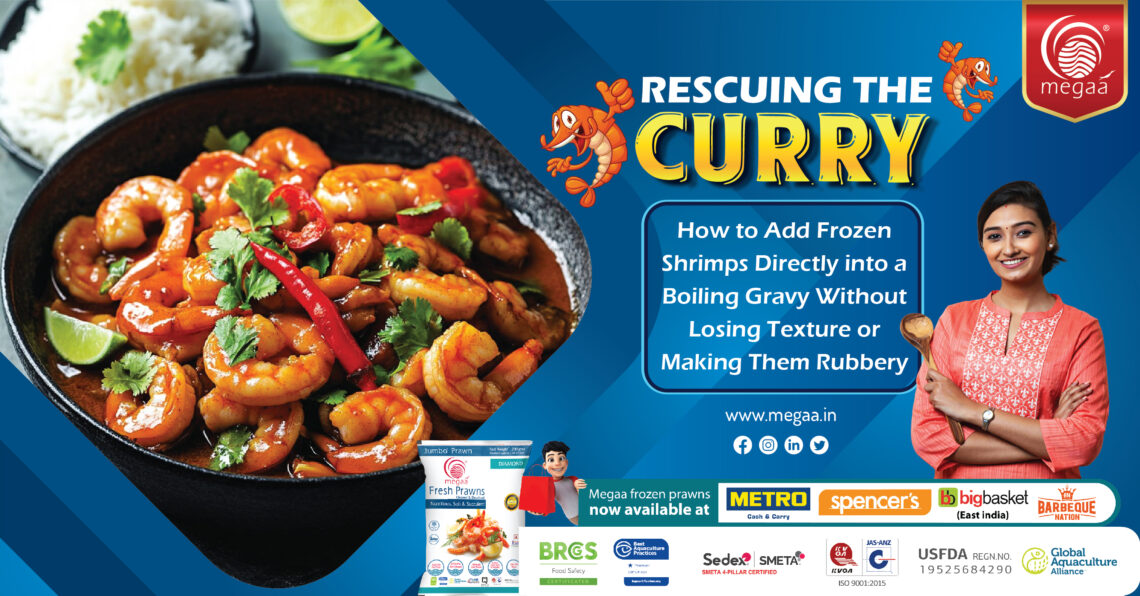
RESCUING THE CURRY
How to Add Frozen Shrimps Directly into a Boiling Gravy Without Losing Texture or Making Them Rubbery
Few kitchen moments are as stressful as realising your gravy is already bubbling away—and the shrimps are still in the freezer. Many home cooks panic at this stage, convinced that adding frozen shrimps straight into hot curry will turn them tough, chewy, or rubbery. The good news? It can be done right. With a little understanding of heat, timing, and technique, you can rescue your curry and still serve shrimps that are juicy, tender, and full of flavour—just the way shrimp manufacturers intend them to be enjoyed.
Why Frozen Shrimps Often Turn Rubbery
Shrimps are delicate proteins. They cook very fast, and once overcooked, there’s no turning back. When frozen shrimps are dropped into boiling gravy without care, two things often go wrong. First, the sudden high heat causes the outer layer to tighten too quickly. Second, if they stay in the gravy too long, the muscle fibres contract and squeeze out moisture, leading to that dreaded rubbery bite.
The mistake isn’t using frozen shrimps—it’s how they’re introduced to the curry.
Choose the Right Stage of Boiling
Before adding frozen shrimps, look closely at your gravy. A rolling, aggressive boil is too harsh. Instead, reduce the heat slightly so the gravy is at a steady simmer. You should see gentle bubbles, not violent splashing. This controlled temperature allows the shrimps to thaw and cook evenly without shocking the protein.
Think of it as welcoming the shrimps into the curry, not throwing them into battle.
Add Shrimps in Small Batches
One of the biggest mistakes is dumping all the frozen shrimps in at once. This drops the temperature unevenly and encourages overcooking as you wait for everything to come back to a boil. Add the shrimps in small batches, stirring gently after each addition. This helps them separate quickly and cook uniformly.
Avoid aggressive stirring. Shrimps are soft when thawing and can break if handled roughly.
Let Steam Do the Work
Once the shrimps are in, cover the pan with a lid for the first 2–3 minutes. The trapped steam helps thaw the shrimps gently while the gravy stays hot but not harsh. This is a crucial step many cooks skip. Steam allows heat to penetrate evenly, preventing the outer surface from tightening too fast.
After uncovering, give the curry a light stir and observe the colour change. Shrimps turning from grey to pink is your signal that they’re nearly done.
Timing Is Everything
Frozen shrimps do not need long cooking times. In most Indian-style gravies, 4–6 minutes is more than enough once added. The moment the shrimps curl into a loose “C” shape and turn opaque, switch off the heat. Tight curls mean overcooking.
Remember, shrimps continue to cook slightly even after the flame is off, thanks to residual heat.
Finish With Fat, Not Fire
Instead of keeping the curry on heat to “set” the shrimps, finish with a drizzle of ghee, butter, or coconut oil after turning off the stove. Fat adds shine, richness, and flavour while protecting the shrimps from further heat damage.
This final touch enhances texture and makes the curry taste slow-cooked, even though the shrimps were added frozen.
A Smart Shortcut, Not a Compromise
Adding frozen shrimps directly to boiling gravy isn’t a shortcut born of laziness—it’s a practical cooking method when done correctly. With controlled heat, gentle handling, and precise timing, you can achieve restaurant-quality texture without thawing delays.
The next time your curry is ready before your shrimps are, don’t panic. Follow these steps, trust the process, and enjoy a perfectly rescued shrimp curry—tender, juicy, and deeply satisfying.