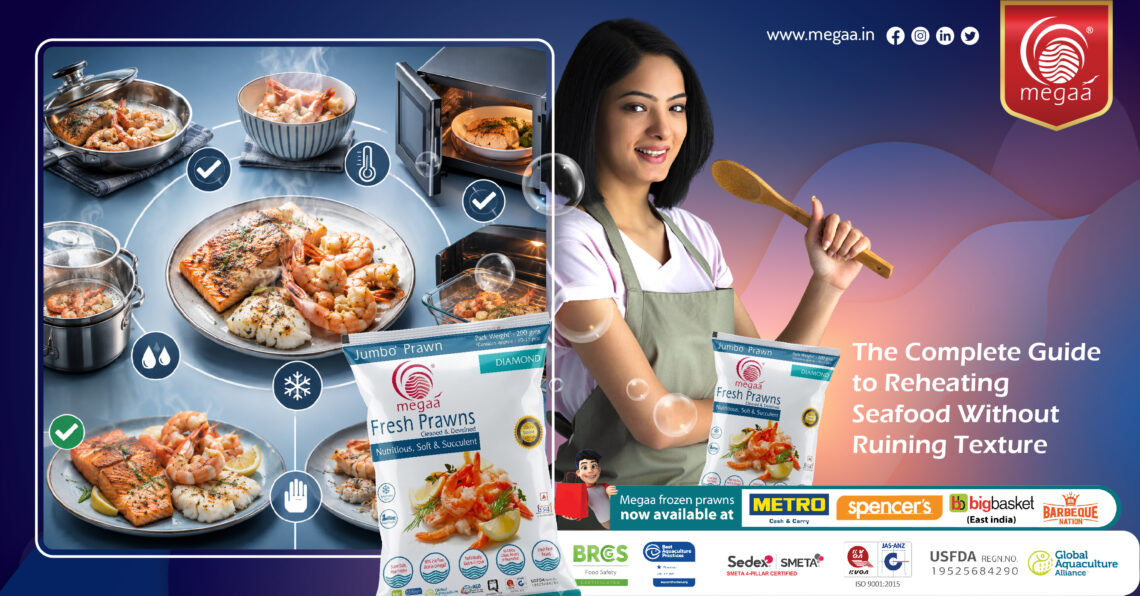
The Complete Guide to Reheating Seafood Without Ruining Texture
Seafood can be delicious when freshly cooked, but reheating it the wrong way can quickly turn tender fish rubbery and prawns tough. The good news is that you do not need to avoid leftovers. With the right method and a little care, you can reheat seafood while keeping it moist, tender and flavourful.
The key is simple: seafood needs gentle heat, not high heat.
Why Seafood Gets Rubbery When Reheated
Fish and shellfish contain delicate proteins that cook quickly. When exposed to high temperatures for too long, these proteins tighten and push out moisture. That is why yesterday’s soft prawns can become chewy and why fish can turn dry and flaky.
Reheating should therefore be about warming the seafood through, rather than cooking it all over again.
Reheating Prawns and Shrimp
Prawns are particularly easy to overcook.
For cooked prawns, a pan is one of the best options. Add a small amount of oil, butter, sauce or water and heat on a low to medium flame. Add the prawns and warm them for just a few minutes, turning once or twice.
If the prawns are already part of a curry or gravy, keep the heat low and allow the sauce to warm gradually. Avoid bringing the dish to a vigorous boil after adding the prawns.
Tip: Large prawns may take slightly longer to warm through, but they still do not need prolonged cooking.
How to Reheat Fish
For cooked fish fillets, the oven can help retain moisture. Place the fish in an oven safe dish, add a spoonful of water, stock or sauce, and cover it loosely with foil. Warm it at a moderate temperature until heated through.
For smaller portions, a covered pan on low heat also works well.
If you are reheating fried fish, avoid covering it tightly, as trapped steam can make the coating soggy. A pan or oven is usually better than a microwave when you want to retain some crispness.
Can You Reheat Seafood in a Microwave?
Yes, but use it carefully.
Microwaves heat food quickly and unevenly, which can easily overcook delicate seafood. Place the seafood in a microwave safe dish, cover it with a microwave safe lid or damp paper towel, and use short intervals at medium power.
Check and turn the seafood between intervals rather than heating it continuously.
What About Seafood Rice, Noodles and Curries?
Mixed seafood dishes can often be reheated successfully because the sauce, rice or noodles provide additional moisture.
For seafood rice or noodles, sprinkle a little water before reheating and cover the dish. For curries, gravies and stews, gentle stovetop heating is ideal. Stir occasionally so the heat is distributed evenly.
One Important Food Safety Rule
Texture is not the only consideration. Seafood leftovers should be refrigerated promptly and stored properly. If seafood has been left at room temperature for an extended period, reheating does not necessarily make it safe.
When reheating leftovers, heat them thoroughly and only reheat the portion you plan to eat. Repeated heating and cooling can affect both quality and food safety.
The Bottom Line
The secret to great reheated seafood is low heat, moisture and patience. Whether you are warming prawns, fish, fried seafood or a comforting seafood curry, avoid treating leftovers like freshly raw ingredients that need to be cooked again.
Handled gently, yesterday’s seafood can still make a delicious meal today.